
Double Amputee Runner Sabik Cohran Shatters Personal Record at Boston Marathon

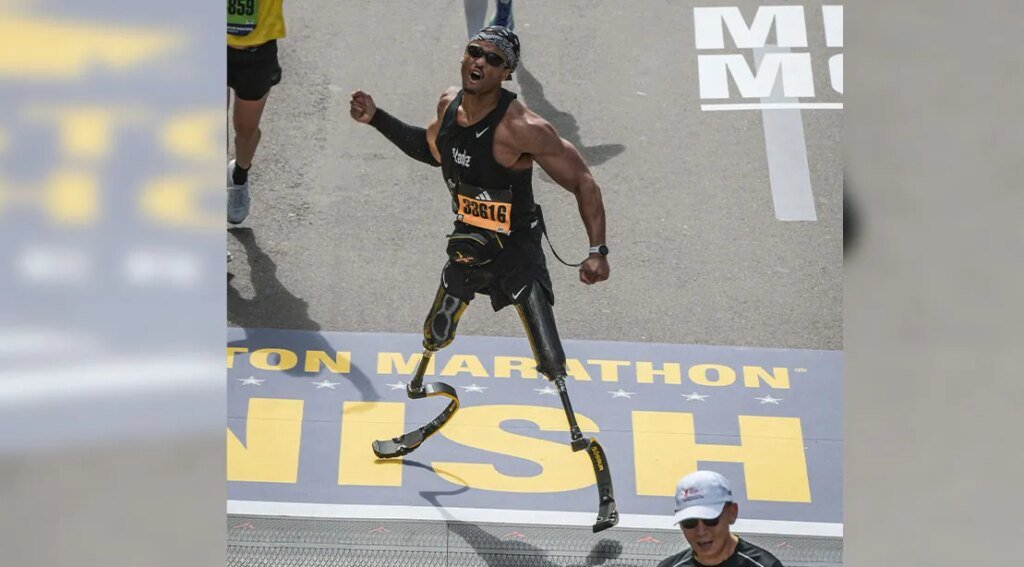
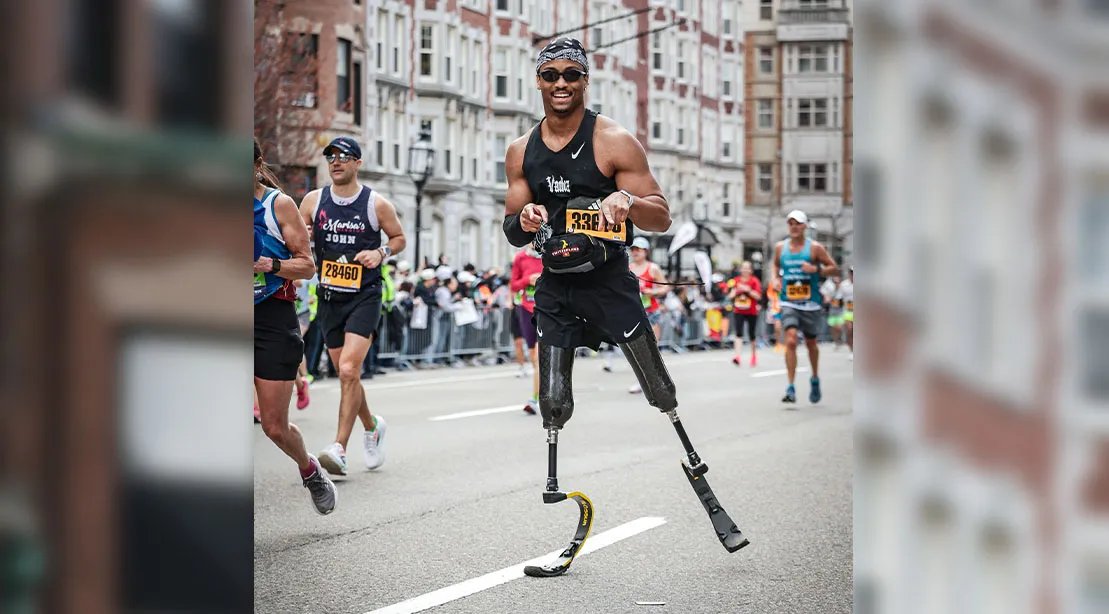
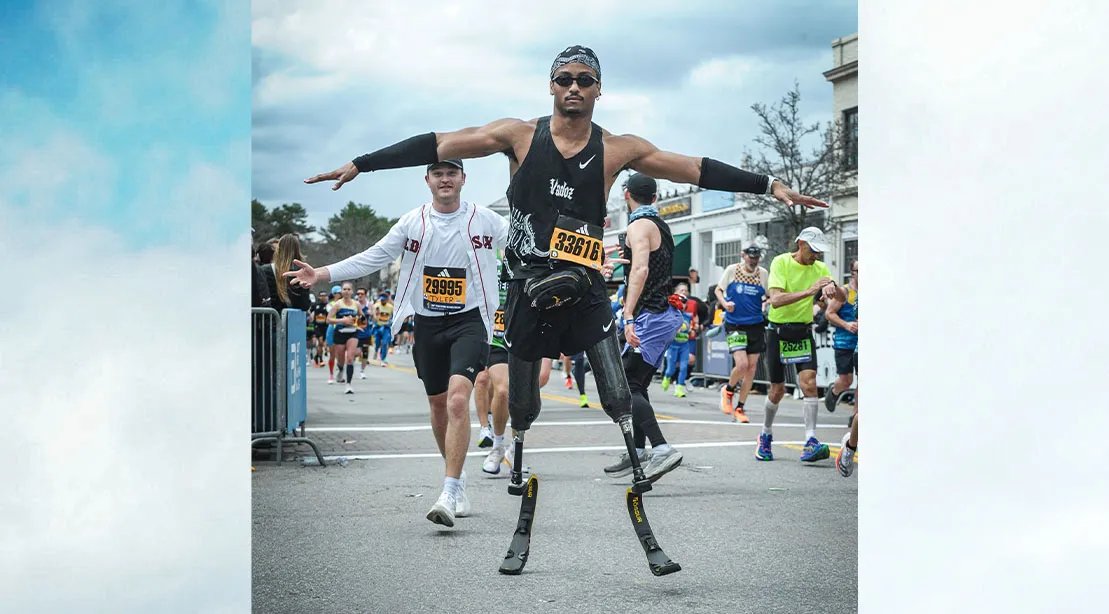
When Sabik Cohran crossed the finish line at the Boston Marathon, the emotion him all at once.
It wasn’t because he had finished one of the world’s most iconic races. It wasn’t just because he had survived 26.2 miles. It was because somewhere during that run, the timeline he had imagines for himself completely changed.
“It was crazy because I was like, ‘We did it,’” Cohran says. “I didn’t really know how good I was doing until like the last two to three miles. Then I was like, ‘Wait, we’re about to PR by 12 minutes. So at the end I gunned it, and when I crossed that finish line… I was like, ‘Oh my God, ain’t no way.’”
There were several emotions during the race. As mile markers passed, so did personal records. Cohran watched as his 10-mile and half marathon PR were set. Much as has been life for him, he kept his head up and kept pushing through.
For Cohran, a double amputee from the Chicago area who was born without shin and ankle bones, the Boston Marathon wasn’t just another race. It was proof that even the ceiling he once imagined for himself might not exist at all.
Growing Up Without Limits
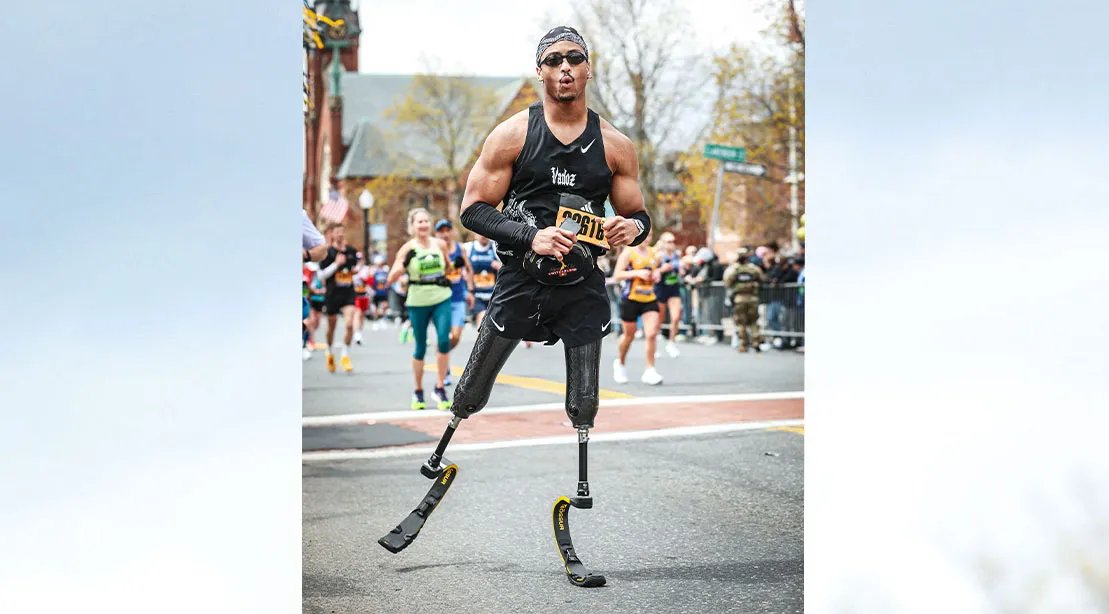
Cohran had both legs amputated at two years old and received prosthetics at four. Sympathy wasn’t the tone inside his household. Perspective was.
“My mom and grandmother would always reiterate you can’t change this. This is you,” he says. “So I always had that mentality of like, ‘Nobody’s going to come save you. You got to do this yourself.’”
That mindset shaped the way he approached sports growing up. He wasn’t interested in sitting on the sidelines or being treated differently. At Schaumburg High School, he played football, wrestled, played lacrosse, basketball, stayed active however he could. There were no limits.
Ironically, though, running wasn’t initially part of that identity. In fact, he spent most of his younger years avoiding it whenever he could.
“I never ran besides lacrosse,” Cohran says, laughing. “I’d be like, ‘Yeah, well I have no legs, so I can’t be doing these laps.’ I’d always kind of bail myself out.”
That changed when he finally received running prosthetics in October of 2024 after years of wanting them. And this changed everything.
Running Became More Than Fitness
Like those who fall into endurance sports later in life, Cohran says the miles eventually became about much more than exercise.
“Running healed my younger self,” he says. “Not that I felt like I was missing something, but I always felt like I know I can be fast. You see people with these prosthetics and I knew I could be fast too.”
Once he got access to running blades, there was no turning back. The running community embraced him immediately, especially after he completed the Chicago Marathon in under four hours during his first attempt.
Cohran didn’t know how well he was doing and had done until the surprise of others that it was his first marathon. What surprised him most, though, wasn’t the attention. It was the impact.
He recalled receiving a message from a physical therapist who brought a patient that had recently lost his legs to one of his races. The person’s spirts were down, but he lit up upon seeing and hearing about Cohran’s achievements.
Moments like that changed the way he carries himself.
“You have to keep every moment in public with some poise,” he says. “You never know who’s watching and could be inspired by what you’re doing.”
Pain
While Cohran’s story looks inspirational from the outside, the physical side of marathon training can be brutal at times.
Before the Chicago Marathon, he was training in prosthetics that weren’t designed for distance running. Sweat buildup inside the binders caused constant pain and instability.
“I had to clean my leg out every two to three miles,” he says. “I’m talking my legs bleeding. I’d have to scoot around the house.”
There were moments where frustration overwhelmed him because there just had to be a different way. Eventually, doctors adjusted the fit, added padding, and introduced anti-sweat spray that changed everything.
“The Chicago Marathon was my first race I didn’t have to stop at all,” he says. “First official run, honestly.”
Getting accustomed to the running blades did come with a learning curve. The first time he ran on them, he realized something something almost immediately: he didn’t know how to stop.
“I started screaming when I ran the first time,” he says. “I was like, ‘I might just die on this pavement.’”
Conditioning became another major adjustment. Unlike the sports he participated in throughout high school, distance running demanded sustained output without breaks, which forced him to learn pacing almost entirely through trial and error. His longest run before the Chicago marathon was about four miles.
Now, with mileage increasing and marathon times dropping rapidly, Cohran’s goals have evolved just as quickly.
He’s Not Finished Dreaming Yet
At 27 years old, Cohran already has his sights on bigger stages and bigger achievements. One of them is to race in all the world’s major marathons by the time he reaches his mid-30s.
But there’s another goal driving him even harder.
“The double amputee world record,” he says. “I want that record. I’m coming for that record, for sure.”
The current world record sits at 2:40:25, and while Cohran knows how ambitious that sounds, he’s never shrunk his expectations.
“A lot of people want to call 27 old,” he says. “But LeBron was getting his first ring at 27.”
Beyond racing, he hopes running and content creation eventually become his full-time focus. Right now, he balances training, social media, and his day job at Dick’s Sporting Goods, often stretching his weeks to nearly 70 hours.
The thought of putting more effort into his running and content creation to continue to inspire others circles through his mind a lot. He would also love to start a run club, do some public speaking. More than anything, he wants people to see possibility when they see him.
“If they could look at me and be like, ‘Well, he’s doing this. I can do that, too,’ that’s what I want,” Cohran says. “Running teaches you confidence in yourself and believing in yourself. I have 100 percent belief and confidence in anything I do now at this point. And running helped me get that.”
[ad_2]
Credit to: Source link