This Brutal Hip Thrust Variation Could Unlock Bigger Glutes Fast

[ad_1]
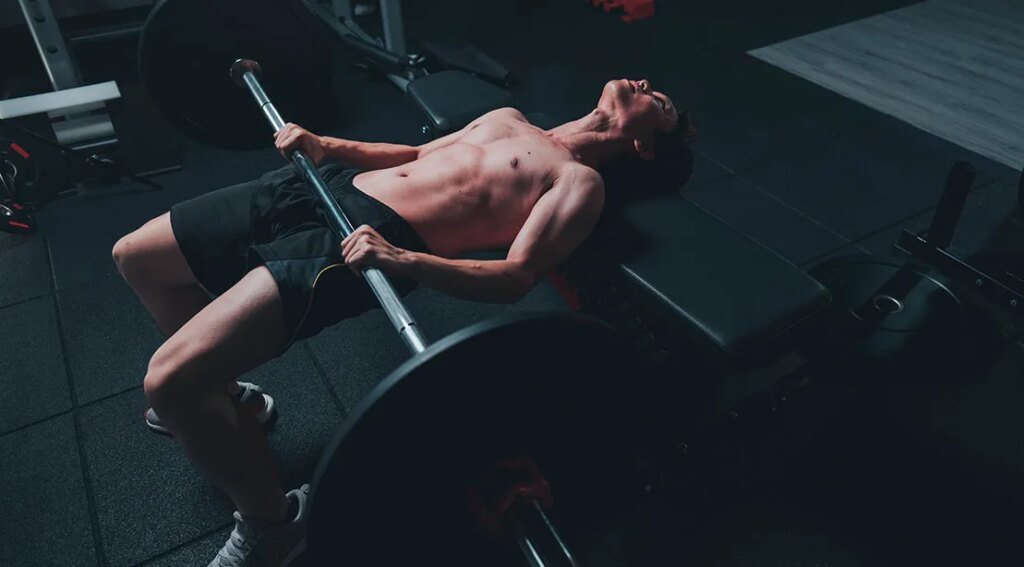
While the hip thrust is a great exercise for making gains in your glutes, many people fail to properly isolate the target area, sharing the load with other muscles instead. To avoid this failure of form, Boston Barbell head coach Chris Martin has a solution.
“Most people who struggle with hip thrusts aren’t weak—they’re leaking force, EVERYWHERE,” explained Martin in a brutally honest Instagram post made on the Boston Barbell’s channel. “Because the bar isn’t on their back, they don’t brace. Their joints aren’t stabilized, so every muscle except the glute picks up the slack. The glute ends up sharing the work with muscles we were never trying to grow.”
The majority of hip thrust fans practice hip thrusts because they effectively build the gluteus maximus, our primary hip extensor. Other muscles recruited include the adductor magnus (inner thigh) and the hamstrings at the rear of your upper leg, but if your form is incorrect, you’ll lose focus on the glutes and overuse other muscles such as the core in order to stay stable. “Here’s the fix,” explained Martin. “Opposing pressure.”
How to Perform the Hand-To-Knee Hip Thrust Correctly
With IFBB Pro and certified trainer Deborah Assuncao helping to demo this unilateral exercise, Martin admitted that this “was never supposed to be an easier version of the hip thrust.” But if you want a more muscular butt, and fancy a challenge, here’s how to give it a try:
- Sit on the ground with a softbox or support behind you
- Plant one foot on the floor and raise your body with back supported
- Bend the other leg at a right angle and push both hands against the knee
- With chin and chest tucked, push the knee into your hands
- To create an opposing force, push the hands back into the knee
- Rock down to around halfway from the ground, squeeze and come up
Why the Hand-To-Knee Hip Thrust is Great for Glute Focused Gains
“That tension locks every joint in the chain into a fixed position. When the chain is fixed, only the glute has anywhere to go,” explained Martin, providing further insight on how to master your reps. “Rock down to about halfway. Squeeze and tuck the glute at the bottom,” he advised. “Drive up from that squeeze—not from momentum, not from your lower back, not from the hip flexor pulling the leg through. The shake you feel at the top is real. That’s tension. That’s the muscle working the way it’s supposed to.”
Best of all, there’s no need for a barbell to get those glutes activated. “If you’ve been doing hip thrusts and never felt your glutes the next day, this is why. The joints weren’t locked. The glute was optional in the movement. This makes it mandatory. Single leg. Chin down. Knee into hand. Hand into knee. Squeeze up.”
Sill, adding weight can make this move even more advanced, so long as you follow Martin’s muscle building strategy. “Once you make it so every bodyweight rep hurts, you get strong. And then, and only then, you add weight. That’s the standard.”
To follow Boston Barbell on Instagram, click here.
To follow Deborah Assuncao on Instagram, click here.
[ad_2]
Credit to: Source link