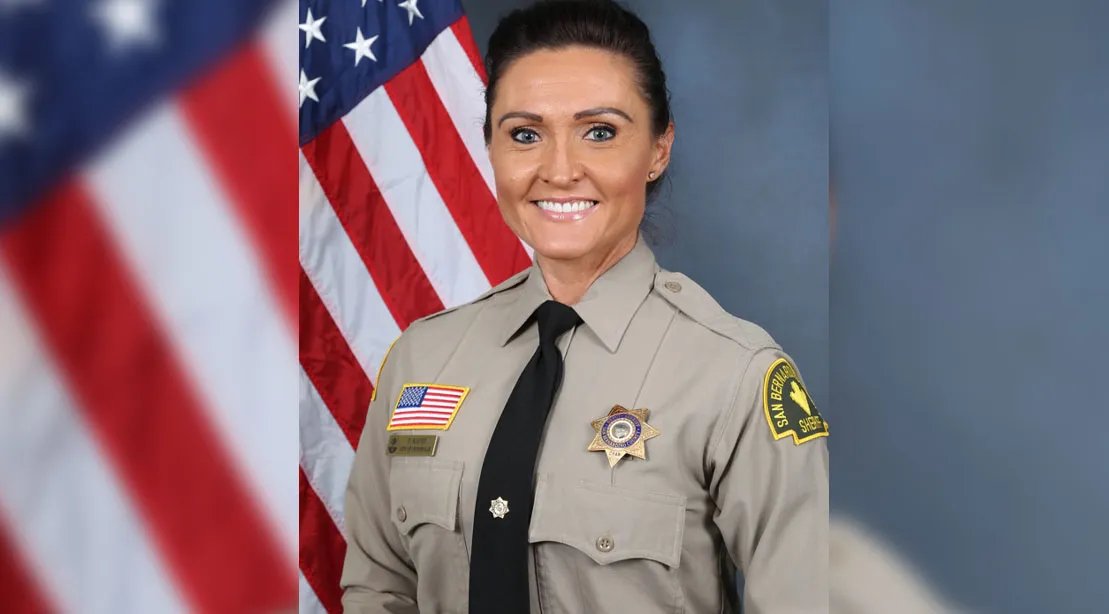
Detective Tiffany Kautz Recalls Her Journey From Near Death To Back in Action

A common cliché in gym culture is when a lifter or athlete “survives” a tough workout. Whether it’s a tough leg day or 12-week long prep, it wasn’t just that the person in question finished, they “survived.”
The Devastating Accident That Changed Everything
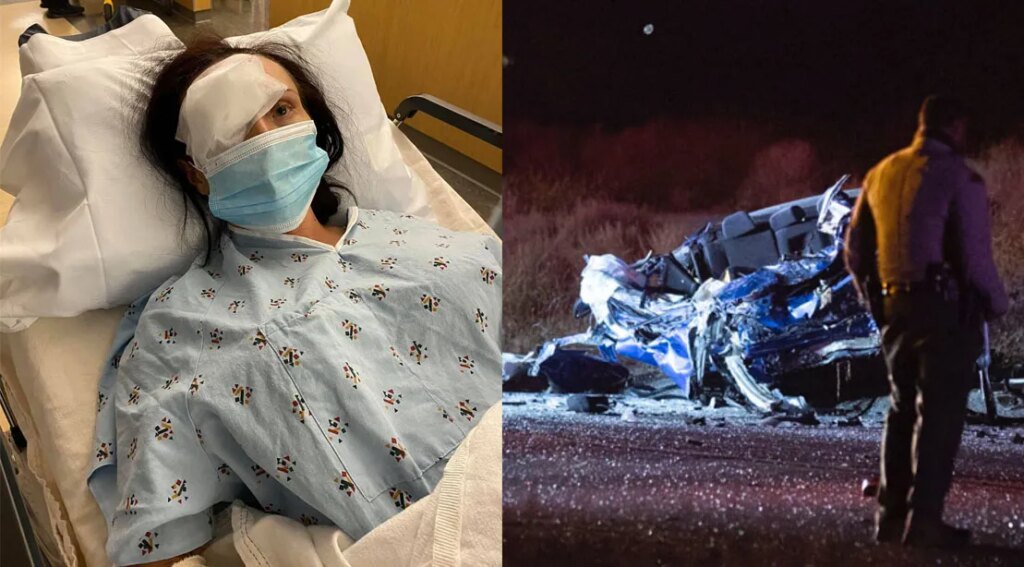
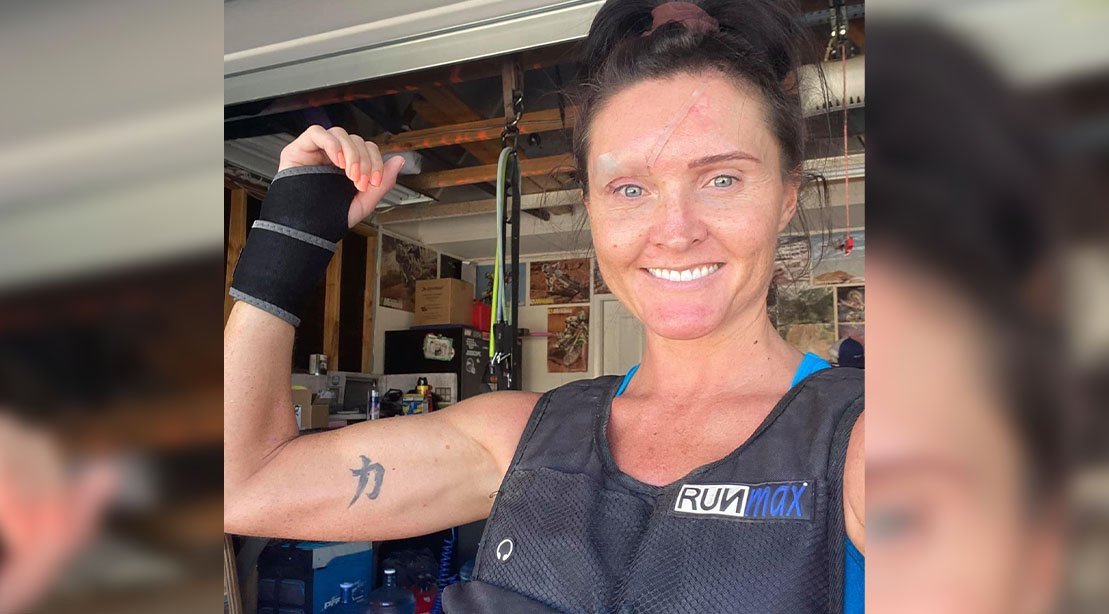
That word has a completely different meaning to Detective Tiffany Kautz of the San Bernardino (California) Sheriff’s Department because she nearly lost her life in June 2020 after a Dodge Ram truck, estimated to be driving 95 miles per hour, crossed the center line. The impact was so violent it didn’t just crush metal; it shredded it. The truck flipped, its engine block raking across the roof of Tiffany’s car like a hot knife through butter. When the dust settled, Tiffany had been scalped from her forehead to her eye. Her hand was nearly severed. She coded twice in the medical chopper.
The key to her survival could be credited to fellow detective Clarence Harris, who she had went to police academy with when her career began and was in the area to respond and notify her family, the first responders that came quickly to her aid, and the doctors and nurses that cared for her in the hospital. Her own athletic background and fitness level were also cited as assets that helped her.
“The nurse or doctor told my husband that the only reason why I survived is because of my physical fitness,” said Kautz. “So, I really, truly believe it saved my life in that incident, and maybe if I wouldn’t have been able, my body wouldn’t have been able to survive.”
How Fitness Helped Save Tiffany Kautz’s Life After a Near-Fatal Crash
Before she ever pinned a badge to her uniform, Tiffany was a fixture in the fitness industry. She’d been a personal trainer and a club manager for 24 Hour Fitness. She knew the science of hypertrophy and the necessity of cardiovascular output. When she transitioned to law enforcement in 2016, she didn’t leave the athlete behind; she brought the athlete to the job.
“I really, truly believe that fitness is even more important to maintain as a law enforcement officer because of the things that we are expected to do. You never know when you’re expected to do those things.”
Kautz couldn’t have known that fitness was going to be a lifesaving difference maker in the way it ended up becoming. Kautz spent a few days in the ICU and two weeks in the hospital in total, but the good news was that she could go home. Once she did, her thoughts shifted to how she could get back to work. That fitness background served her well because she leaned on what she knew and taught clients.
“Once I was discharged from the hospital, I really kicked it into high gear by making sure the nutrition I was getting was full of micronutrients, so lots of colors on my plate,” Kautz shared. She then didn’t focus as much on what she couldn’t do by committing herself more to what she could.
“I was in a cast for, I don’t know, six weeks or eight weeks or something like that. So I couldn’t really do much, but even with my cast on, if I could do a lower body exercise, I was doing the lower body exercise.”
What started out as recovery became an obsession in the best way possible. Even while her wrist was in a stabilizer, she bought ankle cuffs, strapped them to her biceps, and hit the cables for chest, shoulders, and back work.
Within six months, Kautz thought she was close to being ready. That was until she went on a run and felt wrist pain within a few steps due to the vibration and impact of the steps. After all that physical preparation and mental reinforcement, this became the biggest mountain she was faced with. Kautz admitted that she questioned herself and why she was in this position, but the competitor in her was brought out thanks to a doctor that expressed doubt of whether she could return to active duty.
“At one point the doctor told me, ‘You better look into a different career because you’re never going to be able to shoot a gun again.’ And so I go, ‘Watch me.’”
Returning to Active Duty Against the Odds
Whether the doctor seriously thought Kautz couldn’t shoot again or just knew that he needed to reignite her passion; that statement was the equivalent of a gas tank on an inferno. Kautz had been on light duty by this point but grinded daily with physical therapy and working her stabilizing her wrist, then getting it stronger, and finally she got to the stage that she could discharge her weapon again. As great as that was, that was only step one. Kautz’s next challenge was to prove she could do so proficiently enough that she could go back into the field.
Kautz shared, “There’s a qualification that they put you through, and if you don’t pass that qualification, they fail you.”
Kautz missed a quarterly review during her recovery but managed to complete that and requalify by completing the shooting tests. After a long grueling recovery, working light duty while facing mental adversity, and challenging herself to prove a doctor wrong, that first day back in the field was her version of a gold medal.
“I had to watch my partners do all the fun things while I was just sitting writing paper. So, I was so excited to be back, to be in uniform, to go do the thing that I signed up to do, which is help our community, be there and help somebody who can’t help themselves.”
The Mindset That Powered Tiffany Kautz’s Remarkable Recovery
Most people that have been through accidents like Kautz’s would want to put it behind them, but she sees her story as one that could benefit someone else. Like many of her fellow first responders, the end goal is service, which is why she shares her experience and hopes that others can benefit from what she went through by applying themselves to get in better shape, eat healthier, and taking better care of themselves. Sometimes, placing others first in priority means putting yourself first in order. Taking care of yourself to be your best means you can give your best to those you care for. The wife, mother of two, police officer, Figure competitor, and soon to be HYROX athlete is optimistic that if more people do that, they and their communities can be better for it.
“I always make time for myself first, because if I make time for myself, I feel better when I’m taking time for other people afterwards,” Kautz stated. “I really, truly believe that if I’m not at my best, I can’t give you my best.”
[ad_2]
Credit to: Source link