What’s the goal of USMNT’s pre-World Cup friendlies?

[ad_1]
The biggest FIFA World Cup in history is less than two weeks away. Over the course of 39 days, 103 crucial games — and one meaningless third-place game — will be played en route to deciding a global champion.
The stakes are high. So, what better way to lead into the festivities than with … a bunch of friendly games that don’t matter?
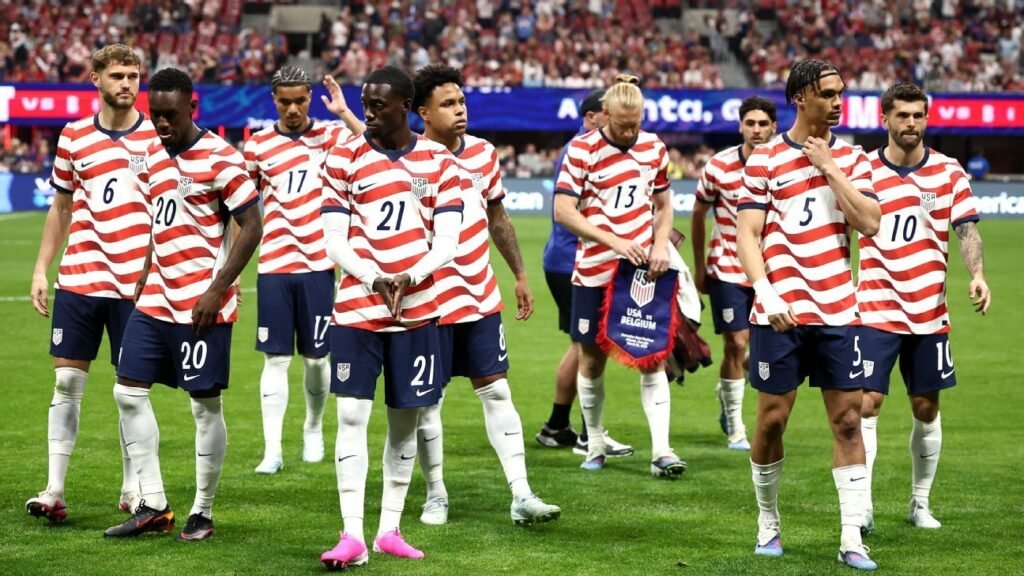
Like the nations flying to its shores, the United States men’s national team will play a pair of friendlies just before the World Cup begins: the USMNT face Senegal on May 31 and then Germany on June 6.
The results won’t count for anything. No points will hit the board for the USMNT until its group stage campaign begins against Paraguay outside Los Angeles on June 12.
So, then, what’s the point of these friendlies that sit on the schedule just before the World Cup? Are they needless distractions and just added risk of players getting injured — or valuable exercises to prepare for the tournament ahead?
Why do teams play pre-World Cup friendlies?
Well, for one thing, national teams play World Cup tuneups because FIFA says they can.
With clubs on the hook to pay player salaries, FIFA only obligates them to release players for national team duty in select international windows, and national teams have precious few opportunities to get together throughout the year. Based on FIFA’s men’s international match calendar, there were only five such windows available for every nation in 2025. Before this summer, there were just two allotted for 2026.
The scarcity of national team games sets the stage for why all parties involved — from sponsors to performance staffers and coaches — are eager to see two games on the calendar before the World Cup even starts.
With national teams engaged in sponsorship agreements and committed to media broadcast deals with rights holders, ensuring games happen as often as possible is crucial for federations around the world. The USMNT’s upcoming friendly with Senegal? That’s not just any friendly. It’s the “Allstate Continental Clasico,” thank you very much. It will be televised on the platforms the U.S. Soccer Federation has signed lucrative rights deals with, too — according to the Sports Business Journal, U.S. Soccer nets around $25 million for their English television rights.
In other words, pre-World Cup friendlies help fund the federation, which has more than a pair of senior national teams — there are also extended national teams, youth national teams, employees, and other expenses — to budget for. These friendlies, then, are good for the bank account.
But these games are important for the players, too.
It’s worth remembering that for players in Europe’s best leagues or any others on a similar fall-to-spring calendar, the World Cup is an offseason affair. For instance: Folarin Balogun, who figures to be the USMNT’s starting striker at the World Cup, finished his season with AS Monaco on May 17, nearly four full weeks between his Ligue 1 finale and the USMNT’s World Cup opener.
Without national team training sessions and games to continue the careful managing of player workloads done at club level, problems could abound. More than scratching and clawing to win, pre-tournament friendlies help reintroduce game intensity to athletes who may have been without it for an extended period.
The Aspetar Sports Medicine Journal published a paper in April, noting that national team “squads are assembled from players arriving with diverse training histories, competitive exposures, injury backgrounds and recovery states. As a result, international performance staff are required to make rapid assessments of readiness and prepare players for high-stakes competition under conditions of uncertainty.”
Having two weeks to tailor training to the needs of individual players before the World Cup can help ease that uncertainty.
These pre-tournament friendlies also give players a chance to impress coaches eager to glean oh-so-rare firsthand information. With very few training sessions and games each year, last-minute friendlies can help managers evaluate players, on-field partnerships, and different tactical setups.
For Pochettino and his staff, a final friendly against Germany will provide a testing ground for an approach that could pop up again deep into the World Cup — should the USMNT make it to the stage where they’re facing another team of Die Mannschaft‘s caliber.
5 things the USMNT should do in these final friendlies
What should be on Pochettino’s radar as his team approaches its meetings with Senegal and Germany?
1. Finalize the first-choice midfield pairing
Given Pochettino’s surprising decision to leave Lyon midfielder Tanner Tessmann out of his World Cup squad, there may just be a starting spot up for grabs next to Tyler Adams.
Of all the unexpected twists in Pochettino’s roster, axing Tessmann and bringing so few natural central midfielders to the tournament was the biggest. Adams, Sebastian Berhalter, Cristian Roldan, and Weston McKennie are the only true defensive or central midfielders in the squad — and even McKennie has almost exclusively played as a half-space attacker under Pochettino.
1:33
Pochettino backs ‘amazing’ Reyna for World Cup success
In his roster reveal news conference Tuesday, the U.S. coach referenced the possibility of playing Malik Tillman or Gio Reyna deeper. He also said that fullbacks Sergiño Dest, Alex Freeman, and Antonee Robinson can play in midfield.
These World Cup tuneups are the only chance left for the U.S. to nail down a starting midfield pairing that many originally expected to be Tessmann and Adams. However, finding the balance between getting reps for Adams and his partner, while preserving the Bournemouth midfielder’s legs for the games that matter most, will be tricky.
2. Hold auditions for Christian Pulisic’s attack partner
Before Pochettino’s roster was unveiled, McKennie looked like the clear starter as the USMNT’s second narrow attacker opposite Christian Pulisic. But now that McKennie may need to act as cover deeper in midfield, there could be room for someone else to earn minutes in the attack.
While history says relying on Reyna to be more than a super sub is a fool’s errand, Tillman, Brenden Aaronson, and Alejandro Zendejas are all positional fits for the role.
Tillman has been a favorite of Pochettino’s throughout his tenure, but he struggled for minutes at Bayer Leverkusen to finish the Bundesliga season. Aaronson, for his part, is more presser than precision passer and Zendejas was one of Pochettino’s wildcard selections after going months without a call-up.
Now that there’s renewed competition for minutes in the attack, all of these players should have the chance to fight for an expanded role during these friendlies.
3. Test out a Tim Ream replacement
Pochettino is bringing five pure center backs to the World Cup, along with Freeman and Joe Scally who have both played as a right-sided center back in possession for the national team.
One reason Pochettino might have loaded up players in the middle of the backline? He could be worried about Tim Ream. While the 38-year-old’s line-breaking passing is still the best of any player in the USMNT’s summer squad, his lack of acceleration and open-field speed is a vulnerability. Having another set of games to test out Ream alternatives against high-quality opponents is hugely valuable for the United States, then.
Auston Trusty may have the inside track to replacing Ream after the Celtic man’s impressive recent national team showings. Mark McKenzie or Miles Robinson could find a way to catapult themselves into being Chris Richards’ partner, too. That is, assuming Richards is healthy after his recent ankle injury.
After a hamstring injury that forced him to miss the March window, Dest returned to action for PSV in early May. He’ll likely make his return to the field for the USMNT in these World Cup tuneups and in doing so, he’ll present Pochettino with a new set of tactical possibilities. Under Pochettino, Dest has been used as both a right back and a right winger. After what Pochettino said in Tuesday’s press conference, there’s also apparently the possibility of him inverting into midfield to be considered. With the 25-year-old’s ability to create chances against compact defenses, he may end up being one of the USMNT’s most important players in a group stage filled with defensive-minded opponents. Reintegrating Dest, ideally in a position where he can attack down the right, will help get him back up to speed with the national team before the games really matter. The USMNT didn’t spend all 180 minutes of their March window high pressing global giants Portugal and Belgium. But they didn’t shy away from the press, either. Under Pochettino, the U.S. has regularly pushed forward on opposing goal kicks in hopes of forcing turnovers high up the field. With a dearth of high-level attackers capable of breaking down a block or of knifing forward on a long counterattack, there’s plenty of logic in the manager’s inclination to press. However, the U.S. team press has been far from perfect — or even steady — since Pochettino took over. Last fall, the USMNT’s press was ripped apart by South Korea. Earlier this year, Belgium found their way through with relative ease. While the high press may become more relevant for the United States should they make a run in the World Cup’s knockout rounds, clashes with Germany and Senegal will provide the chance to refine it.4. Reintegrate Sergiño Dest
5. Refine the press
[ad_2]
Credit to: Source link