What’s in an emote? Analyzing 747 gestures during the World Cup group stage


James Tyler
Multiple Authors
Despite the usual existential dread that bubbled in the background leading up to the 2026 World Cup, the tournament has been an absolute delight to watch from start to finish. The prospect of 104 games, in 16 cities, across three countries, involving 48 teams from Algeria to Uzbekistan, seemed tiring just to write; and yet, it has been a wonderful blur.
The underdog stories (Cape Verde, Norway) delivered, the superstars showed up in force to dominate the Golden Boot race, the big teams rode their luck to give us four semifinalists consisting of the top four FIFA-ranked teams and, well, the three host nations reached the round of 16.
Another delight? The pregame lineups on TV.
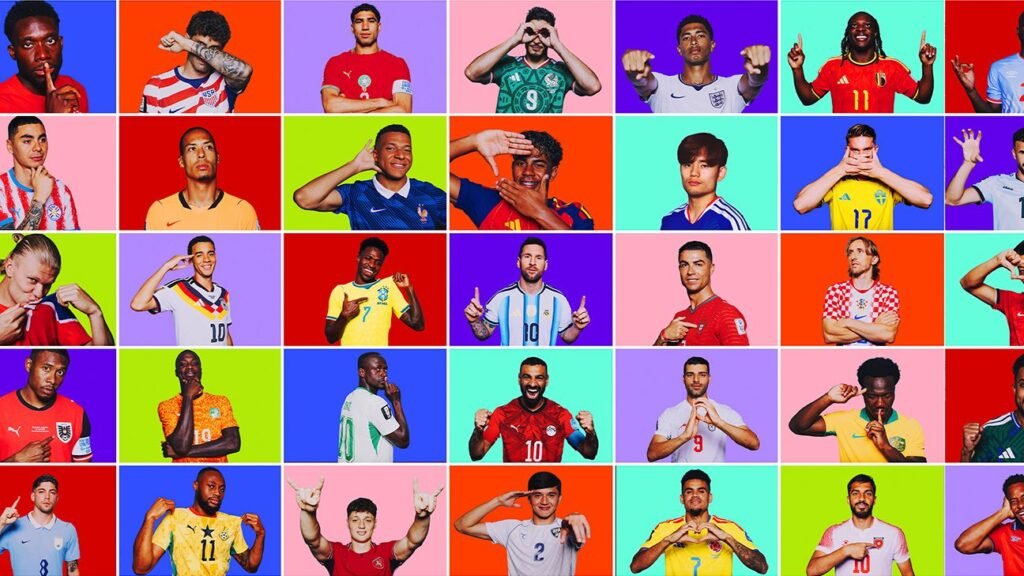
For years, leagues have had static lineup graphics with small images of the players squished alongside their names in formation, but the 2026 World Cup afforded players the chance for two to three seconds of airtime to show themselves to the global audience. And in watching those during the group stage, it seemed only right to do a little data collection when it comes to how players from around the globe chose to express themselves in this small, but important, window.
Which pregame gestures are most universal? Which ones are unique? Which countries had the widest range of self-expression, and which didn’t?
But first, the numbers
The method was simple: watch every single pregame lineup and tally every single gesture shown. Only those who started games got to show the world their custom emote, which meant we could only tally players featured from the opening kickoff. Going through each of the group stage matches, it quickly became clear too that players had only one emote regardless of how many games they played, which helped narrow the data collection given the repetition. (We’re looking for unique players/unique emotes only.)
From there, each group game was studied for those players who started in Games 2 and/or 3 because those counted as “new” in our data. So, all-in, we counted 747 unique emotes from 747 players in 72 games across the group stage. Some nations rotated only a little (such as Congo DR and Germany, who used 13 players in three games) while others emptied the bench as the group stage went on: Norway, Argentina and the United States each used 21 of their 26 players over that same span.
Most teams fell in the range of 15-18 players, which gave us a solid base of data to assess.
The big countdown
We counted 43 unique and specific emotes across the 747 players, with emotes grouped by their likeness and intent. Manipulating the badge on the shirt came in many forms — touching the badge, kissing the badge, pointing to the back, grabbing it forcefully and trying to rip the badge off the shirt — but those were grouped into one emote.
There were two more categories added to the 43: “signature move/pose” and “combo.”
The former is self-evident: some kind of specific move unique to the player as will become clear later. The latter is reserved for players who did multiple things in their short window; popular in that combo crowd was the “badge grab and fist pump,” which were counted as separate emotes in data collection but, when combined, seemed better as a single category rather than one example of badge grab and one example of fist pump.
No. 1 emote: Respecting the badge
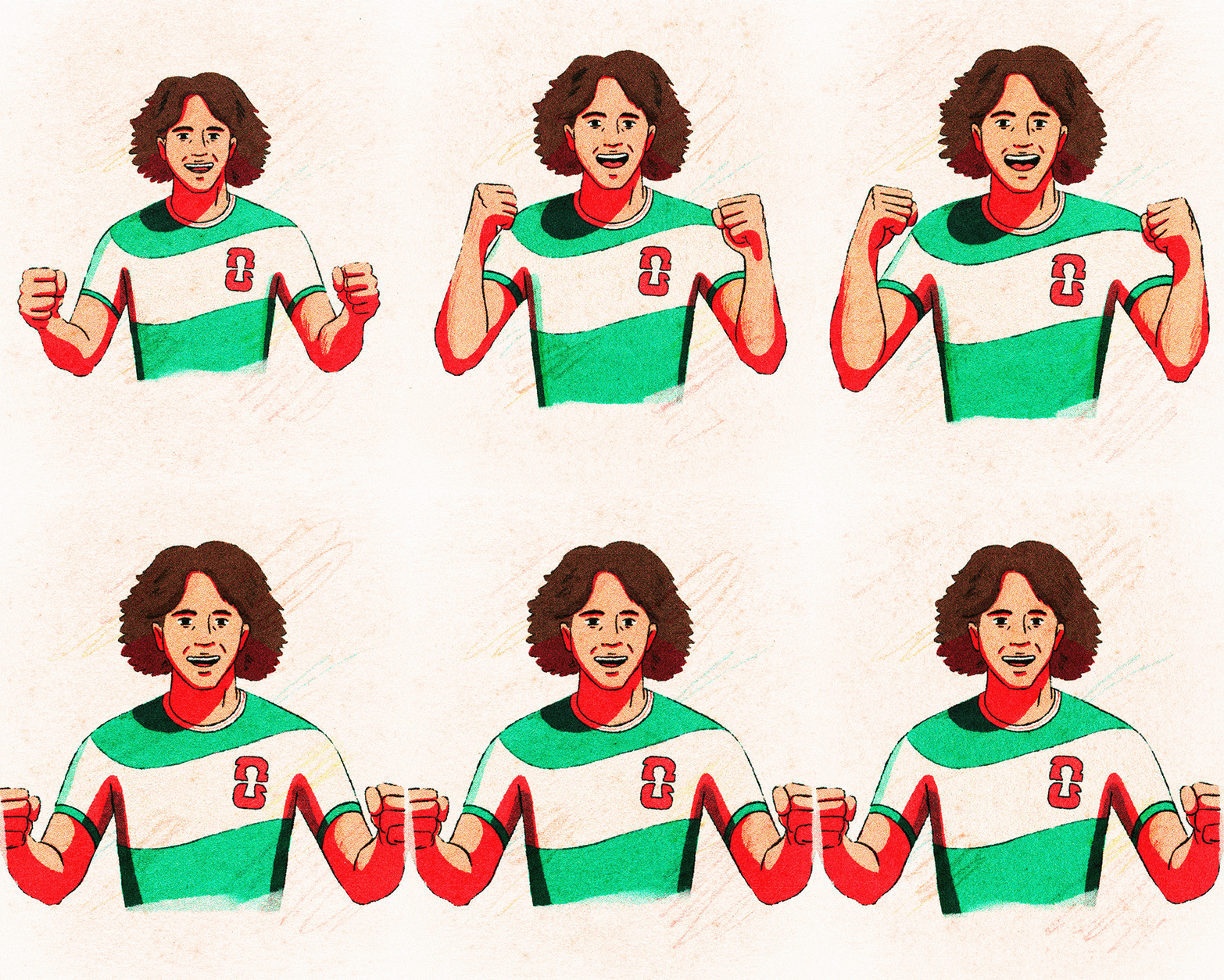
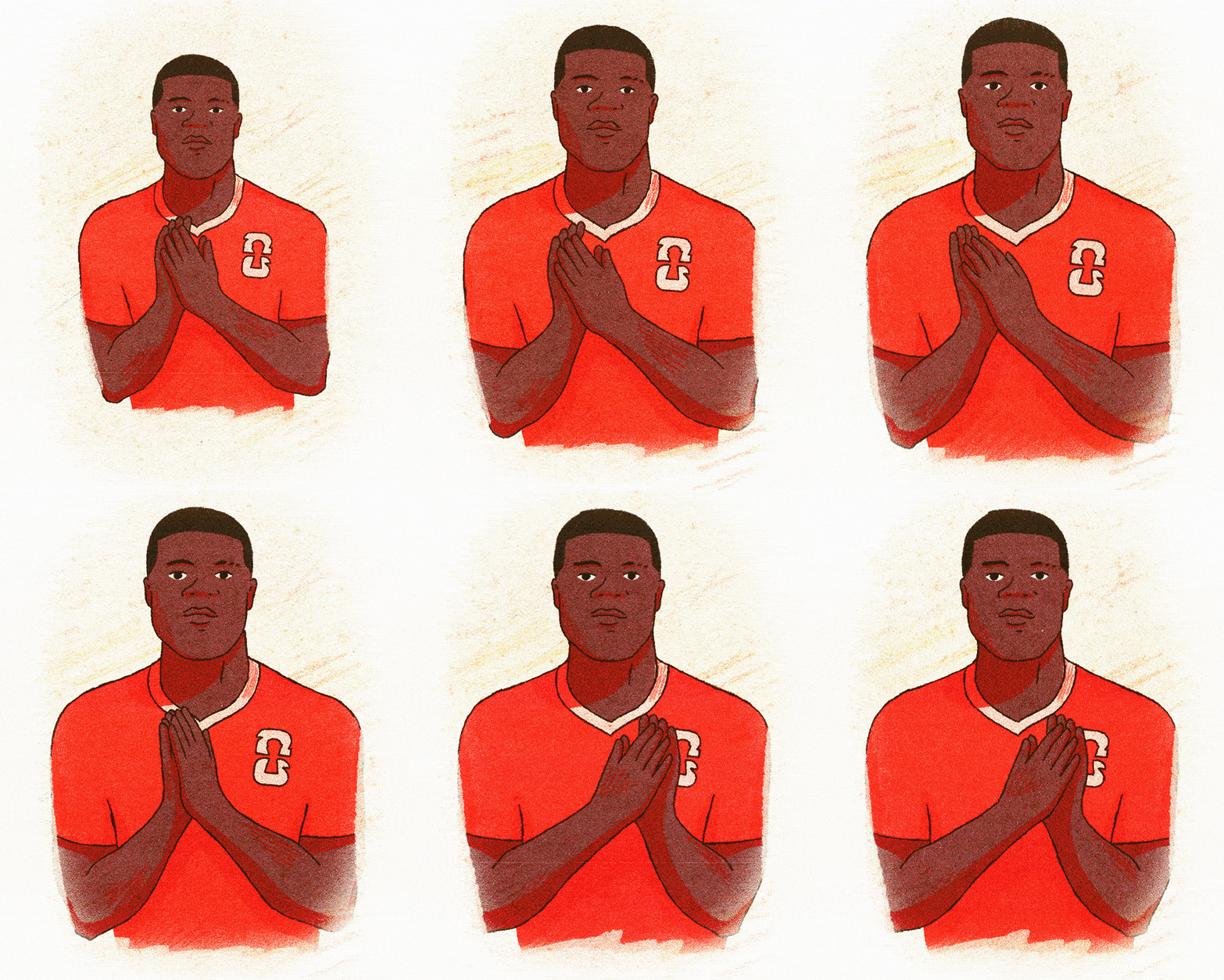
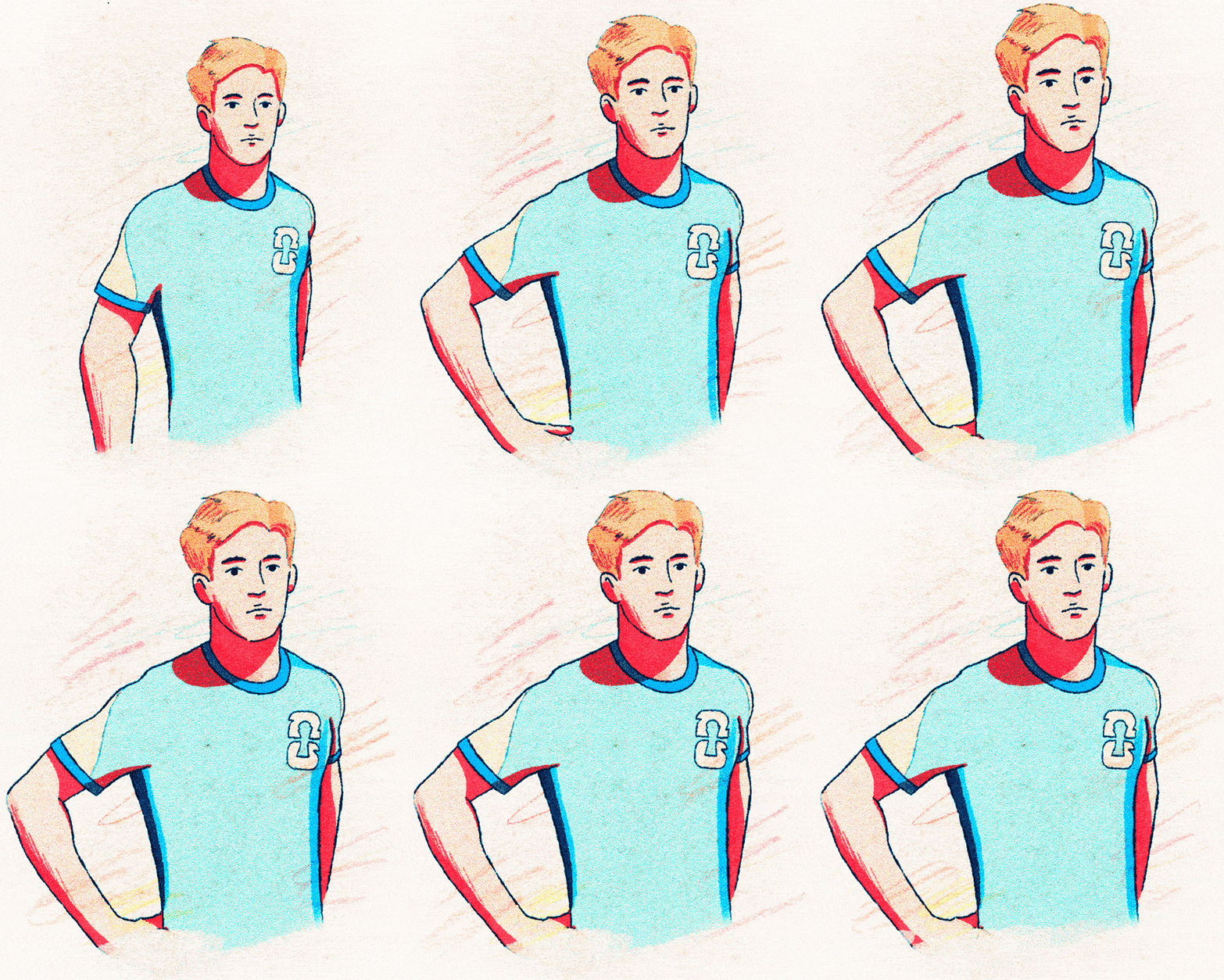
All illustrations by Rohan McDonald
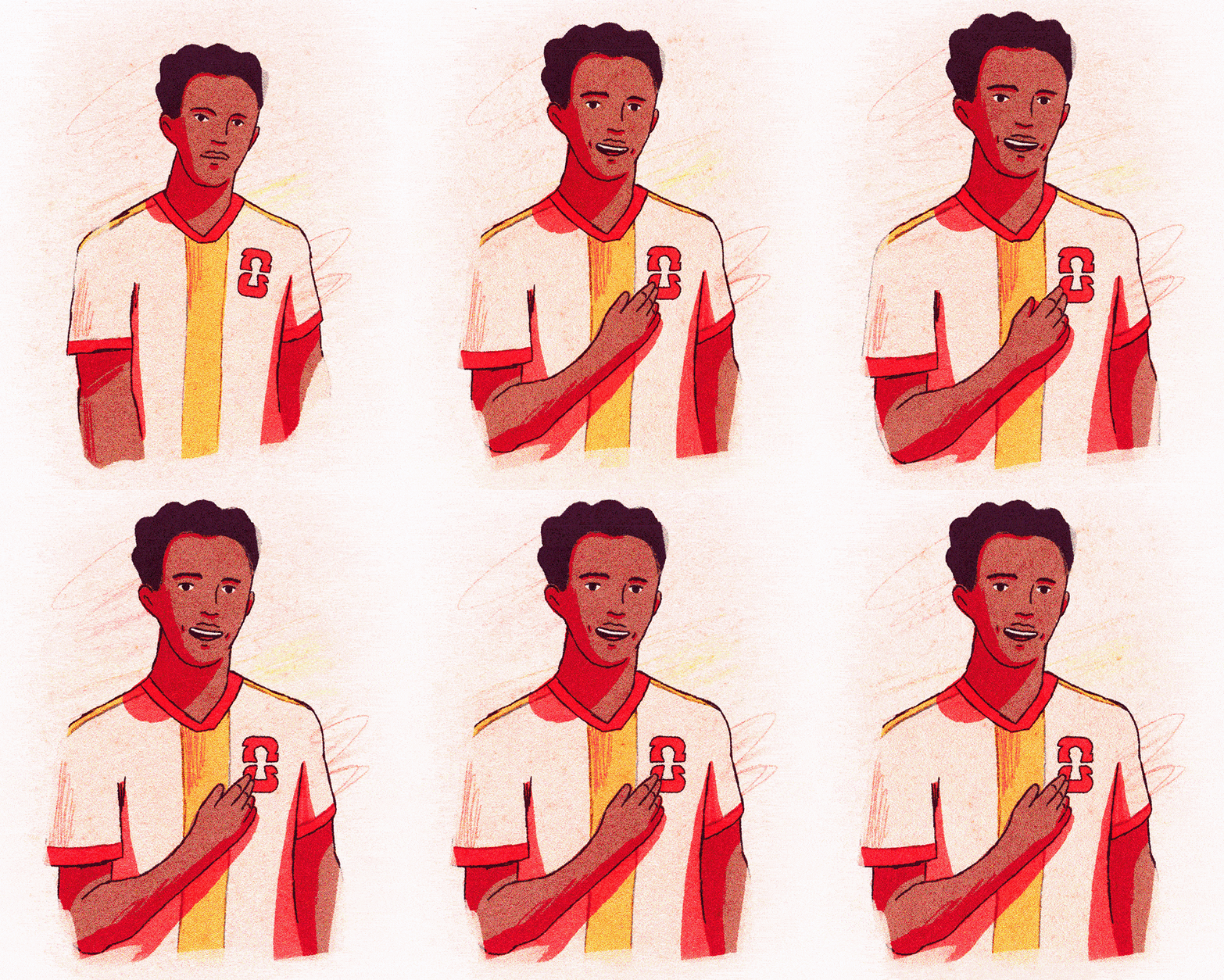
Perhaps to nobody’s surprise at a World Cup, the badges really did matter most in the small emote window. Representing one’s country is a little higher stakes than the club team that pays you, and so 131 players across our 747 — nearly 18% — chose to express that in a variety of methods.
There is also a sense of “safety in numbers” when it comes to choosing something to express national pride before competing at the World Cup.
“The touching of the badge — because it’s so common — feels like a socially acceptable way to show some patriotism,” said Dr. Juveria Zaheer, an associate professor in the Department of Psychiatry at the University of Toronto. “They know that other guys do the same thing, so it feels like a safe option.”
No. 2 emote: Folding the arms
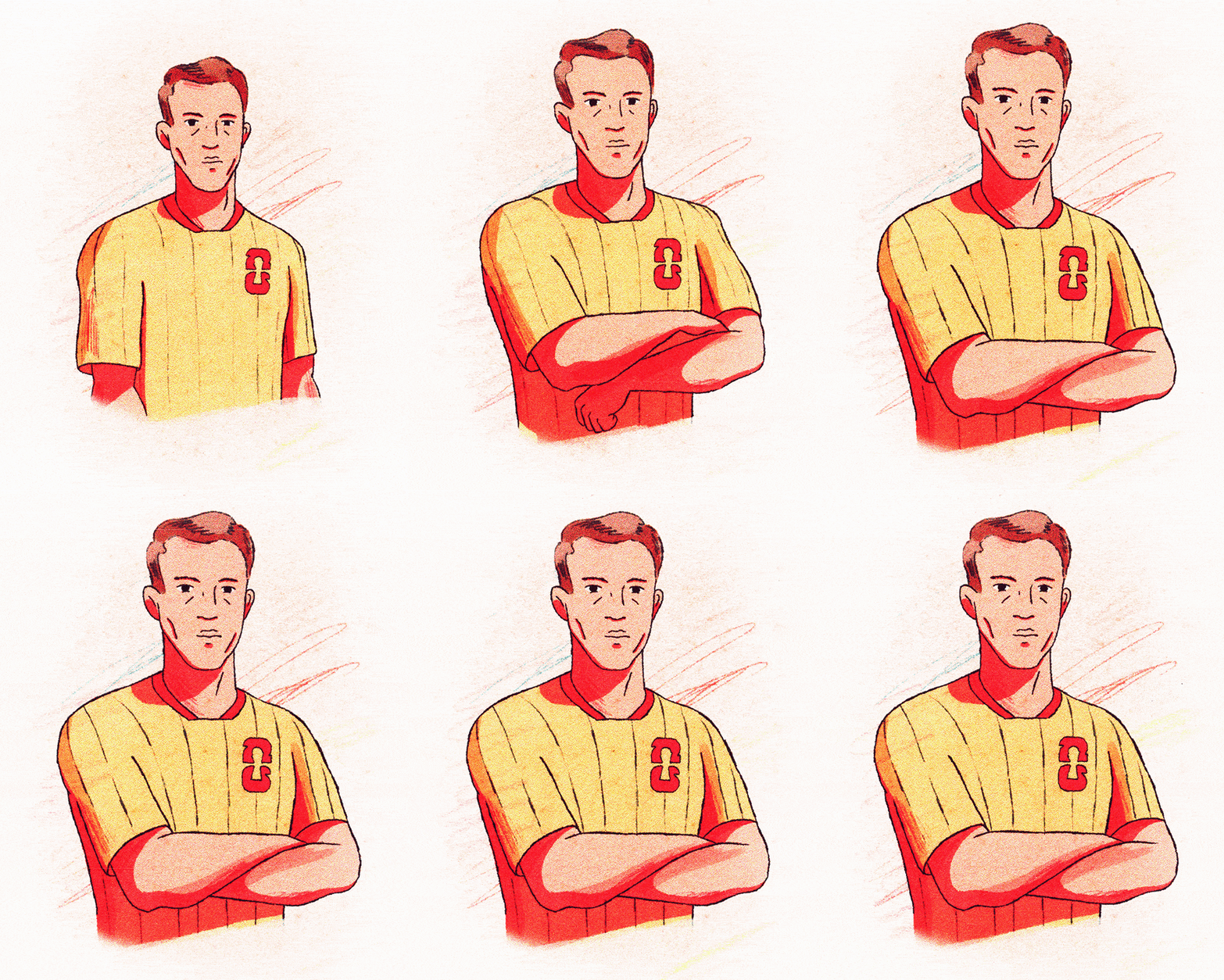
Another dominant emote across the World Cup was the slightly off-center folding of the arms. It was the second-most used emote among players despite 10 of 48 teams having nobody adopting it. Several countries, such as Iran, Austria, the United States and Ghana, embraced it as their most-used gesture with 12, 11, nine and seven examples, respectively.
Some players were “frozen” in the pose when the emote began, while others used their time to more theatrically fold their arms and settle into a kind of nightclub bouncer pose. Long understood as a “defensive” pose, the gesture actually comes loaded with different interpretations.
“If someone has the personality of ‘I’m just here to play,’ they may want to project seriousness through folding of arms,” Zaheer said.
Other connotations include defensiveness/protection, a way to block out anxiety-inducing stimuli and a way of expressing importance; we just think they’re all trying to look super tough and dialed in, as one needs to be at a World Cup.
No. 3 emote: The two-handed fist pump
World Cups are fundamentally about joy and passion as we celebrate the sport in all its glory, and what’s more joyous than the two-handed fist pump? Lots of players (31) chose a single hand, but nearly 12% of World Cup athletes assessed went with both, perhaps to suggest double the joy.
As expressions of triumph go, few are more ubiquitous than this. “It feels fun and enthusiastic without taking a social risk,” Zaheer said. And it makes sense that Norway, one of the best stories of the World Cup, declared more triumph than anyone else, with eight of their 21 players embracing the pump. Yet 16 teams had nobody using it, perhaps because it seemed silly or self-conscious when they were ostensibly there to work.
Emote No. 4: Rubbing hands together
This one was surprisingly popular among two of the host nations, with seven players from the U.S. team and five Canadians adopting the hand-rub emote as their own during the pregame intros. Hand-rubbing connotes several things, but the main elements we’ll focus on here are two-fold: the idea of “let’s get to work, let’s cook” (as popularized by former NFL player Anthony Adams) and the scheming hands of someone with sinister intentions (think Jafar from “Aladdin”).
Overall, it’s another way to express a sense of anticipation for the upcoming event — what’s bigger than repping your country at the World Cup? — though it’s not as universal as some of the other emotes on this list. Group G (New Zealand, Iran, Belgium, Egypt) didn’t have a single recorded hand-rub emote, with 23 countries in total not adopting it.
No. 5 emote: Hands on hips
Another bouncer-style pose, this one is all business. It’s assertive, it’s confident, it’s suggesting a sense of control. Iraq dominated this emote, with 11 of their 13 group stage starters adopting the power pose.
Breaking down some of the least-used emotes
There was still plenty of room for individualism among the data, though, with several players making use of their spotlight to do something truly unique. Belgium made headlines by virtue of their 4-1 win over the U.S. after the Folarin Balogun “incident,” but I personally couldn’t stop thinking about their tricky winger, Jérémy Doku, removing an imaginary crown from his head and gently setting it down before the end of his emote.
The Dutch threw tons of personality into their emotes, but Nathan Aké’s laid-back “cowabunga hands” were a good window into his generally elegant, relaxed style of play. Emam Ashour’s “lion growl” was eye-opening though he didn’t take it as far as he could have, freezing mid-growl, and remarkably, only one player in the entire 747-player pool chose a prayer hands emoji for their time on TV.
Faith and spirituality go hand in hand with sports — especially when your team is about to take part in a penalty shootout — but only Mohamed Hany chose to express that so explicitly. Notably, of the 13 players so far to score an own goal at this World Cup, Hany has been credited with two (vs. Belgium, vs. Australia), a tournament first.
Also props to Issa Laye for bringing a little Harlem Globetrotters-style basketball fun to proceedings. We know a ton of soccer players love the NBA (Antoine Griezmann, anyone?) but Laye was the only one to show his skills by spinning the ball on his finger flawlessly for three seconds (and, presumably, before and after the camera began rolling).
Which teams did the most and least?
With hundreds of players from all over the world taking part this summer, we found outliers at both ends of the emote spectrum, with some teams rolling out a lot more uniqueness and others adopting a more team-oriented set of gestures that fit a collective theme rather than a display of individual personalities.
So which teams were most expressive?
In all, 15 of 48 teams deployed double-digit emotes (including the combos), with the above nations having the most variance among their group stage starters. The Dutch were fun to quantify because nearly everybody did something different, with only the “come here” pose being replicated.
“This finding is so interesting: I wonder about a cultural component to this — not the country’s culture, but team culture,” Zaheer said. “More variability could potentially indicate higher levels of individualism, a more fun and fluid style of play vs. a commitment to discipline and order, but in general, it’s a little bit easier to take a risk and show your personality if you know your teammates are doing the same!”
The Dutch “total football” style lends itself to individuality within a system, while Portugal tracks in terms of stand-alone poses considering how it’s a team consisting of Cristiano Ronaldo and a bunch of other stars who are used to being stars in their own right.
The final word, according to our expert: “I love the variability, but I also know that when I have been on ‘Jeopardy!’ I have never once done anything fun in any intro in my life, so I respect it.”
In terms of homogeneity, it was a surprise to see the U.S. at the top of the heap. All 21 players in the group stage were split among four of our top five most-used emotes: Nine chose the “folded arms,” seven went with “hand rub,” four opted for “hands on hips” and one went with the badge touch/grab.
Considering that this team was feeling a ton of pressure and media hype pre-tournament, it makes sense that they perhaps weren’t feeling super expressive on the days when they had to show up for photo shoots and World Cup prep. When the mind is so relentlessly focused on business, it can be hard to make room for joy and at times, their play reflected that pragmatism.
England and Switzerland also fall into this “all business” category — it might also hint at the fact that these teams are used to playing in World Cups or major soccer tournaments with club or country, which means they saw this task as more drudgery than delight. Teams that maybe aren’t as experienced (Jordan, Tunisia, Curaçao) chose to embrace the novelty compared with their more jaded peers.
And finally…
It wouldn’t be an emote article without some of the more enjoyable signature moves from the 33 counted among the 747 players: props to this crew for making the most of that two-to-three-second global TV window to present personalities and self-expression that will live on longer than the results themselves.
Nizar Al-Rashdan’s “bird hands” were amazing in a sea of folded arms and fist pumps — check it out if you can, because he seems very happy with his emote as he’s doing it — as were the expected trademarks of Viktor Gyökeres (the “Bane mask”) and Erling Haaland (Zen meditation). Perhaps due to the shared first name, South Africa’s Aubrey Modiba paid homage to Drake with the “Hotline Bling” hands, while Julián Quiñones was the only player noted to bring a prop that wasn’t a soccer ball, draping himself in the Mexico flag and cheering in a celebration of national pride.
Also, a word for the 14 players (two from Mexico, Cape Verde and Brazil, one from South Africa, Curaçao, New Zealand, Iran, France, Ghana, Panama and Croatia) who chose to simply do nothing in their emote window. Said Zaheer, “This is so subversive that I love it! Doing nothing is actually more disruptive than any of the gestures, and it takes a particular kind of person to choose this.”
Sometimes, in a world of overwhelming imagery and sensory overload, standing still is the most expressive action of all.
[ad_2]
Credit to: Source link