Ranking top of 2025, 2026 NBA drafts: Would Flagg still be No. 1?




Jeremy Woo
Multiple Authors
After watching Cooper Flagg’s impressive NBA adjustment on his way to Rookie of the Year honors this season, it’s easy to forget he is still 19 years old.
Rewind a few years, and recall that the Dallas Mavericks star was originally part of the 2025 high school class, going head-to-head for several years against AJ Dybantsa, Cameron Boozer and Darryn Peterson, each of whom is expected to go in the top three in the draft next week. Flagg, who reclassified to graduate high school in 2024, is roughly the same age (or in some cases, younger) than many of the top freshmen in this draft class.
What if Flagg had stuck to his original high school class, played at Duke last season and entered the 2026 draft? How would he stack up vs. a loaded group of prospects? Would he still have gone No. 1?
Yes, this is a tricky exercise in hindsight — especially after he just averaged 21.0 points, 6.7 rebounds and 4.7 assists per game. In my mind, the answer is simple.
For the sake of the exercise — and with early returns in the 2025 draft quite promising — here’s a combined ranking on how I would stack up the top five prospects from each class, based on how I rated them coming out of college:
More NBA draft coverage:
Latest mock draft | Top 100
Top comps | Order | Draft
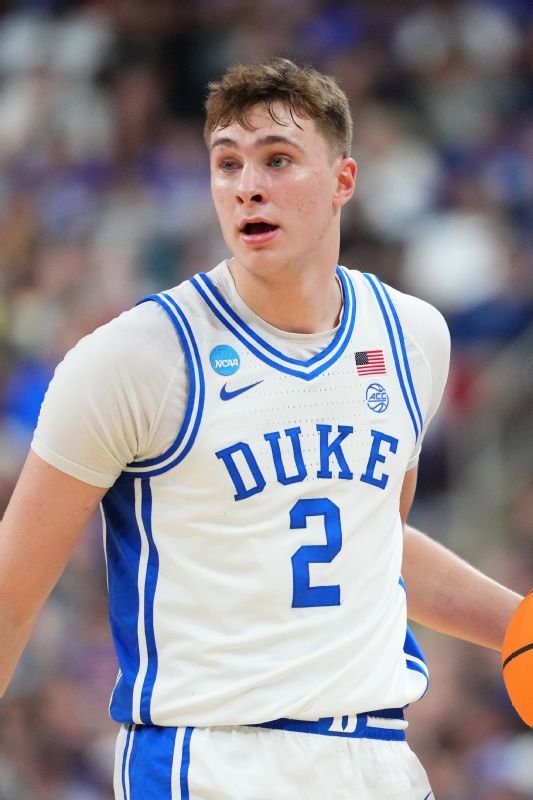
Rank in 2025 class: No. 1
Current team: Dallas Mavericks
2024-25 college stats: 19.2 PPG, 7.5 RPG, 4.2 APG, 59.3% TS, 14.9 BPM
Knowing what we knew then — and what we know now — Flagg is the clear No. 1 in this group. There were so few holes in his overall profile that the question was always about what level of heights he’d reach, not about whether he would succeed in the NBA. He finished college on a growth trajectory, with good indicators that he’d develop not only as a shooter, but also as an all-around scorer, and was extremely young for his level with solid positional size.
In my mind and in the eyes of many around the NBA, the real piece of what made Flagg a special prospect was his intangibles: his competitiveness and consistency of production and effort manifested in every sense. It was unique that his defense always came before his offense — something he took pride in. Not many young stars enter the league as fully-fledged two-way players — Flagg had a leg up on his peers before he even accepted the challenge of being Duke’s No. 1 option.
While Flagg’s offensive game wasn’t always aesthetically pleasing, the results were often there, particularly in the win column. And while his growth areas remain the same — he shot just 29.5% from 3-point range as a rookie in Dallas this season — it certainly wasn’t a given that he’d walk into the NBA as a 20 PPG scorer. Truly elite prospects tend to smash expectations at every stop, particularly during these key growth years and level adjustments, and the case with Flagg has always been the same — he may just be a little bit different than everyone else.
2025 combine measurements: 6-7¾ barefoot, 7-0 wingspan, 8-10½ standing reach
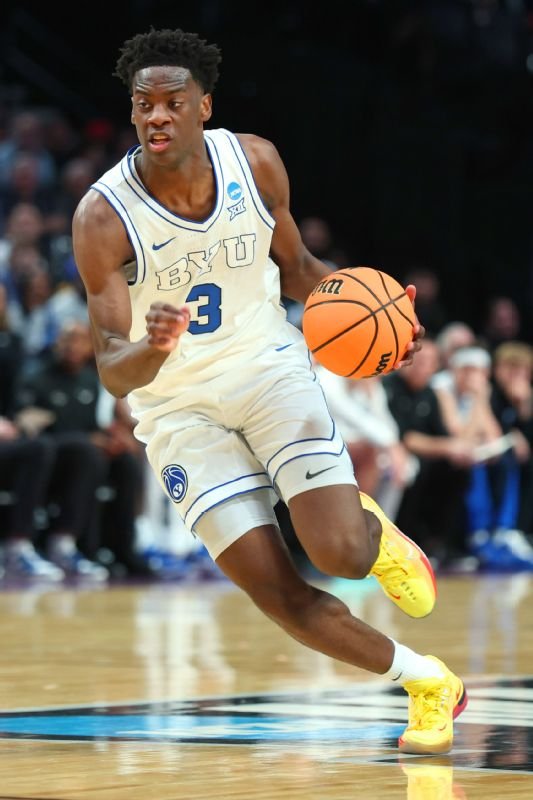
Rank in 2026 class: No. 1
2025-26 stats: 25.5 PPG, 6.8 RPG, 3.7 APG, 60% TS, 10.1 BPM
Dybantsa made a leap as an all-around offensive creator in college, improving as a decision-maker and playmaker for teammates. Although BYU went 23-12, there were ups and downs, particularly after Richie Saunders tore an ACL on Feb. 14. That challenge was beneficial for Dybantsa’s growth, giving him no choice but to accept heavy responsibility and manage his energy in games his team had no chance to win without his best effort.
The comparison between Dybantsa and Flagg is a little bit more intriguing to talk through than the others, given the fact that they’re of similar size, play the same position and have already been cast as contemporaries while playing each other several years.
Dybantsa is the more powerful downhill driver, giving him higher offensive upside in the big picture and a better overall physical profile — although based on what Flagg showed this season, his offensive ceiling looks higher than expected a year ago. Coming out of college, Flagg was ahead of Dybantsa as a jump shooter, but Dybantsa is a more physical midrange player who also shouldn’t have an issue pushing 20 points per game as a rookie. His 3-point shooting projection is less rosy and will need time to reach passability, but Flagg is in that boat too.
Unsurprisingly, Flagg clears Dybantsa on the defensive end, an area for improvement that will require a full-on mentality shift for Dybantsa to close the gap. That’s within the realm of possibility, as he can be quite hard to score on when he wants to be. Although it’s fair to reason that he was basically playing all 40 minutes down the stretch for the Cougars — circumstances that justify some conservation of energy — his defensive output was underwhelming.
Factoring in that Flagg is only 39 days older than Dybantsa and entered the league a year earlier, this isn’t too hard a call to make. It is, however, a discussion we could wind up revisiting over the next decade if Dybantsa emerges as a star and puts himself in that conversation.
2026 combine measurements: 6-8½ barefoot, 7-½ wingspan, 8-10 standing reach
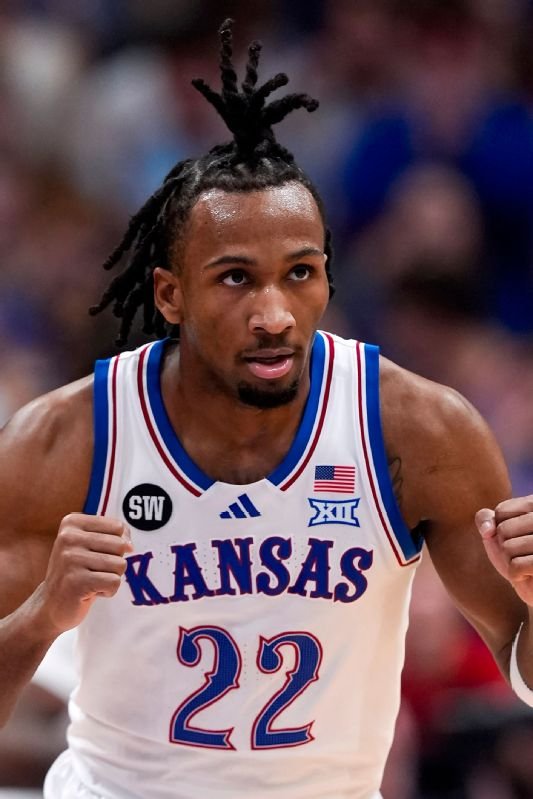
Rank in 2026 class: No. 2
2025-26 stats: 20.2 PPG, 4.2 RPG, 1.6 APG, 57.8% TS, 12.4 BPM
Entering the season, Peterson would have been a strong contender for No. 1 in this group: I felt strongly about his offensive talent and ceiling, and still believe he could be an All-NBA level talent if things smooth out for him. With the way the NBA has historically prioritized size at the top of the draft, guard prospects are rarely viewed as true No. 1 pick contenders. Although the variables introduced by his season at Kansas have complicated his evaluation, Peterson checks every box for a backcourt scorer. He is the most gifted shotmaker to enter the NBA in some time.
Peterson’s highest-end outcomes could clear every player on this list, largely because of that dynamic shotmaking profile and how easily scoring comes to him when he’s fully healthy. He’s also a strong defender for his position. It’s entirely possible he gets right and becomes the best player in this group — but the overall safety Flagg provides keeps the 2025 top pick ahead. The way I see it, there’s not much separating Peterson and Dybantsa other than personal preference and risk perception.
2026 combine measurements: 6-4½ barefoot, 6-9¾ wingspan, 8-7 standing reach
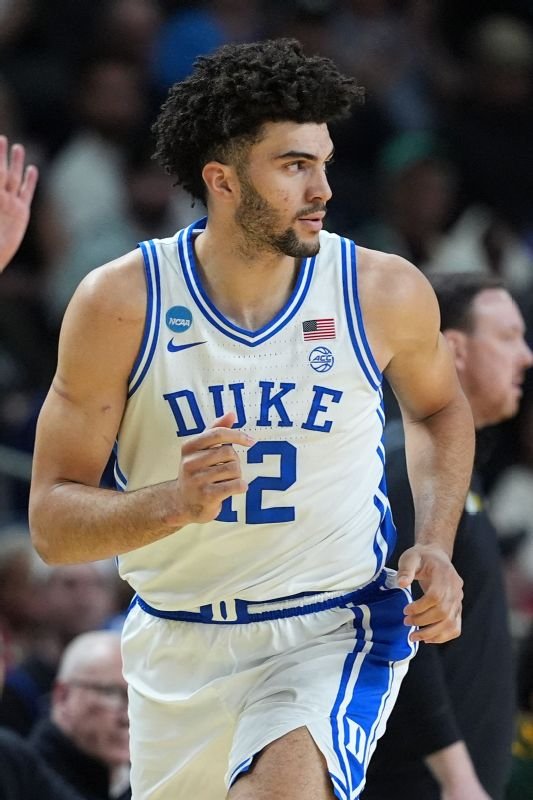
Rank in 2026 class: No. 3
2025-26 stats: 22.5 PPG, 10.5 RPG, 4.1 APG, 65.3% TS, 17.1 BPM
After putting together one of the best one-and-done seasons ever, Boozer has a real place in this conversation, even if he’s most likely to hear his name called third in this draft. His statistical production clears everybody in this group, underscoring why NBA analytics models universally revere him. What you see with Boozer is exactly what you get: He’s exceptionally smart, tough and skilled, makes teammates better and will be a productive player from the day he enters the league.
Time will tell how much it truly matters that a lot of other players can run faster and jump higher than Boozer — his advantage is that he can see the game quicker than just about everyone. But as we split hairs between great players projecting out, it’s a small separator. He may very well struggle defending multiple actions or finishing directly over elite length. The question is really just whether the myriad other good things he does will outweigh that deficiency in the long run.
2026 combine measurements: 6-8¼ barefoot, 7-1½ wingspan, 9-0 standing reach
Rank in 2025 class: No. 2
Current team: San Antonio Spurs
2024-25 college stats: 19.4 PPG, 4.6 RPG, 4.0 APG, 58.6% TS, 8.5 BPM
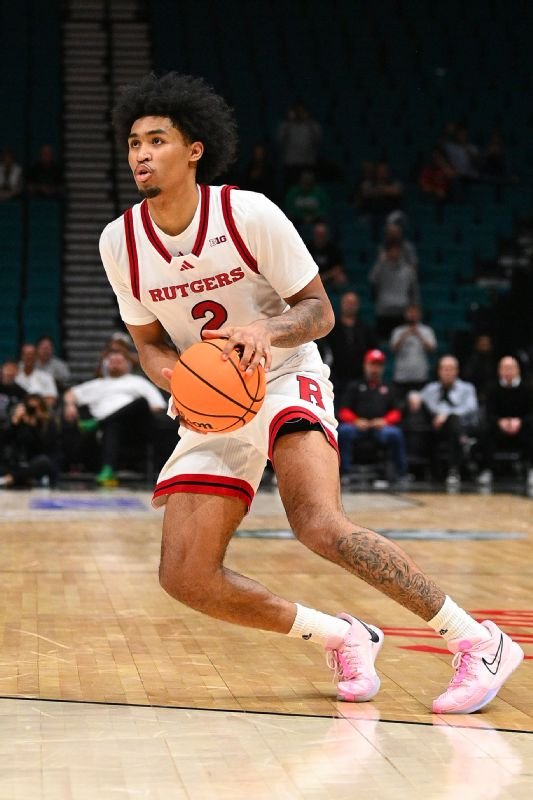
Yes, Harper left quite the impression in the NBA playoffs as a rookie. We still have to rewind to how I felt one year ago. I ranked Harper as the No. 2 prospect behind Flagg, an opinion that was a general consensus around the league.
Combining these two classes, I’d pencil in Harper here, with his excellent size and playmaking upside giving him All-Star potential. It’s worth noting he’s just four months older than Caleb Wilson. The main questions about him after a season at Rutgers were whether he’d find consistency in a winning context, and how much his average 3-point shooting would hold him back. He has been excellent for the San Antonio Spurs and appears to be ahead of the curve, landing in an excellent situation. But his shot (which has looked promising during this playoff run) is still a long-term development area.
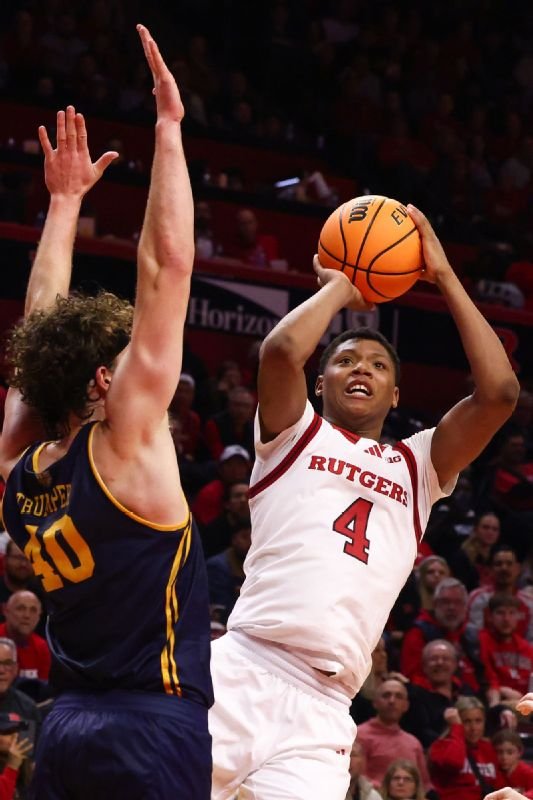
Dybantsa, Peterson and Boozer feel more bankable today than Harper did a year ago, but I’d still put him ahead of Wilson because of the value of Harper’s archetype as a tall playmaker and his advanced feel and skill. His playing for a 15-17 Rutgers team that had little supporting talent next to Harper and Ace Bailey clouded the evaluation a tiny bit. Harper’s immediate NBA success is a good reminder of how tricky it can be to extract even the most talented players from their poor contexts, and also that sheer talent tends to break through — especially when surrounded by a talented roster at the next level.
2025 combine measurements: 6-4½ barefoot, 6-10½ wingspan, 8-6 standing reach
Rank in 2026 class: No. 4
2025-26 stats: 19.8 PPG, 9.4 RPG, 2.7 APG, 62.6% TS, 12.7 BPM
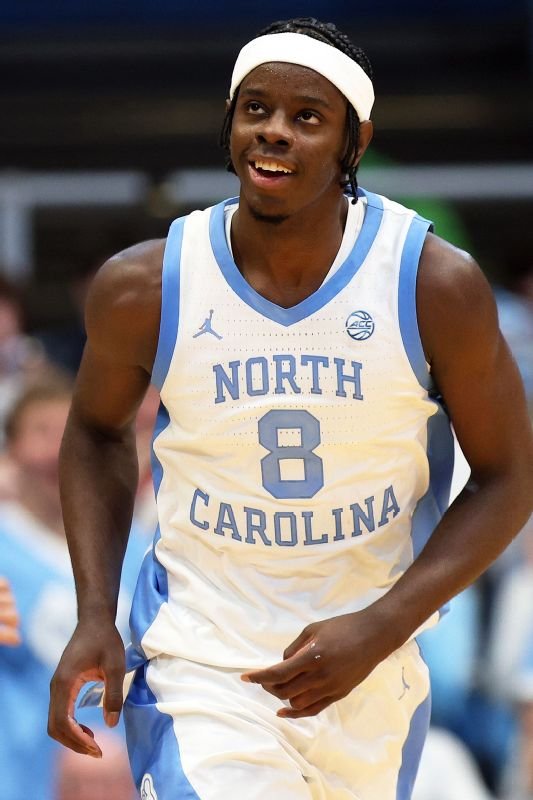
I have Wilson as the fourth player in the 2026 class, but the upside cases I’ve heard for him are completely valid. There are people around the NBA who rate him higher — ahead of Boozer — based on the level they project Wilson to reach. It’s easy to see why people are enamored: Wilson is unusually explosive off the floor, dunks everything and regularly puts his fingerprints on games, despite his skill set still being raw in many areas.
The fact that Wilson is a bit further away from a skill perspective, and also that he is older than the five players ahead of him are (slash were) on draft night — puts him a hair behind for me. He’s an entire year older than Boozer, with whom he shares a birthday. None of this is to say Wilson won’t approach his ceiling, but it might take some time for him to become functionally versatile on the perimeter at the four, with development needed as a shooter and ball handler. He could wind up being much better than this, but there’s some risk involved in that projection. Regardless, he’s a terrific prospect who has earned his lofty standing.
2026 combine measurements: 6-9¼ barefoot, 7-¼ wingspan, 9-0 standing reach
Rank in 2025 class: No. 3
Current team: Philadelphia 76ers
2024-25 college stats: 15 PPG, 5.6 RPG, 3.2 APG, 54.0% TS, 11.4 BPM
Edgecombe had a successful rookie season, looking like the backcourt cornerstone the 76ers hoped when they picked him at No. 3. Although he has a ways to go from a shooting and efficiency perspective, he played a ton of valuable minutes, learned on the job and has a lot of room to reasonably improve. He was arguably ahead of schedule relative to expectations, helping Philly win a playoff series, making the All-Rookie first team and providing excitement for the future.
With what Edgecombe has shown in a full NBA season, I’d understand someone ranking him aggressively, but I’d have him here based on his predraft scouting report: Last year, I loved his two-way upside and downhill burst, with his athleticism and scoring instincts giving him plenty to tap into long term, but he was also still on the rawer side as a playmaker and scorer.
2025 combine measurements: 6-4 barefoot, 6-7½ wingspan, 8-5½ standing reach
Rank in 2025 class: No. 4
Current team: Utah Jazz
2024-25 college stats: 17.6 PPG, 7.2 RPG, 1.3 APG, 53.6% TS, 3.7 BPM
Bailey has always been a bit more enigmatic than the other players on this list, and he put up the worst freshman season of the group by the numbers. But everything with Bailey is about projecting out, with his tough shotmaking ability at his size portending a high ceiling if he can refine everything else. He has time for that to bear out, with what seems to be a good developmental runway with the Jazz.
His rookie year in Utah fell roughly in line with expectations, as he showed growth defensively but struggled to get to the foul line and wasn’t ready for much of a playmaking load. The Jazz are bringing him along slowly, and what type of role he can carve out next season as Utah starts to try and win games will be a good developmental checkpoint.
2025 combine measurements: 6-7½ barefoot, 7-½ wingspan, 8-11 standing reach
Rank in 2026 class: No. 5
2025-26 stats: 17.9 PPG, 5.1 RPG, 4.2 APG, 59.6% TS, 11.0 BPM
Wagler is my favorite prospect in this year’s draft after the top four come off the board, with his unusual trajectory, fast-improving offensive game and remarkable decision-making all worth buying long term. His playmaking ability and room to develop as a lead guard put him a touch ahead of how I viewed Kon Knueppel — similarly not a traditionally athletic prospect — at this time last year.
In hindsight, Knueppel may have been a spot or two too low — but regardless, Wagler’s size and playmaking instincts should adequately compensate for the foot speed, giving him an attractive ceiling. There are plenty of intriguing guards in this class, but this is who I’d place my chips on.
2026 combine measurements: 6-5 barefoot, 6-6¼ wingspan, 8-4 standing reach
Rank in 2025 class: No. 5
Current team: Charlotte Hornets
2024-25 college stats: 14.4 PPG, 4 RPG, 2.7 APG, 64.2% TS, 9.5 BPM
Knueppel, who finished second in the Rookie of the Year race, was right up there with Flagg and proved more NBA-ready than Edgecombe and Bailey, as his prolific efficiency at Duke suggested. Though the concerns around his athleticism limited the way some viewed his upside, his skill set immediately scaled up into an NBA context.
As it turned out, everything translated: He increased his output on similar efficiency with the Hornets and set the rookie record for made 3s. Knueppel will be an NBA fixture for some time. The question now is what type of heights he can reach as an individual scorer. In hindsight, you can easily make an argument to consider him higher after seeing his immediate impact.
2025 combine measurements: 6-5 barefoot, 6-6¼ wingspan, 8-5½ standing reach
[ad_2]
Credit to: Source link