NCAA denies reinstatement for QB Sorsby; Texas Tech to appeal

[ad_1]
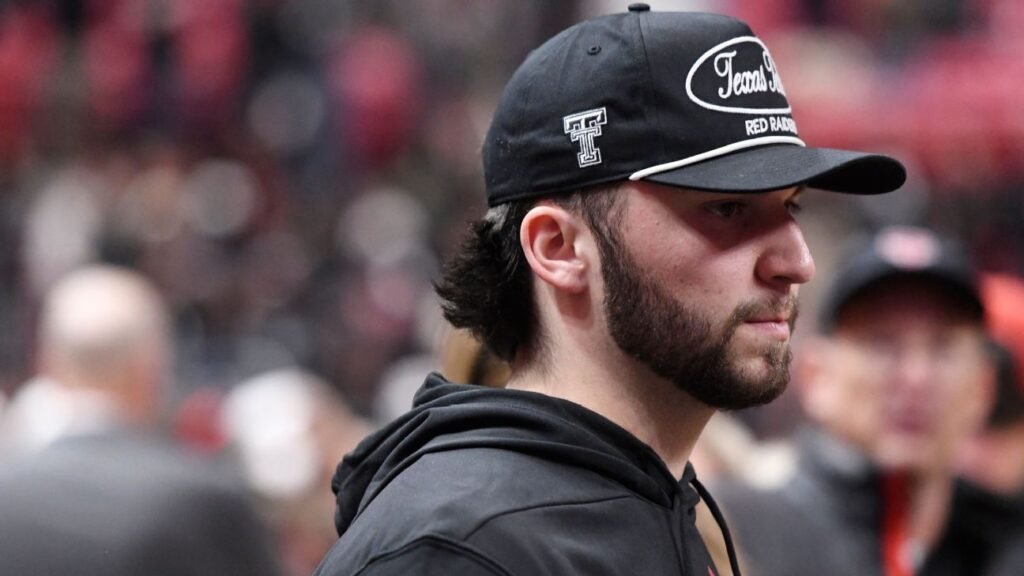
The NCAA has denied Texas Tech quarterback Brendan Sorsby’s request to be reinstated as eligible for the 2026 season, even as the school president publicly backed Sorsby’s desire to play for the Red Raiders this season amid a “complex situation.”
The NCAA decision, which is in line with precedent, will put Sorsby’s lawsuit against the NCAA seeking an injunction for his eligibility for the 2026 season into further focus, as his court date looms Monday in Lubbock County.
Along with that case, Texas Tech president Lawrence Schovanec also stated in a letter to the Texas Tech community that the school planned to appeal the NCAA’s ruling.
“We believe that given the facts and the context of Brendan’s case, the NCAA’s ruling should be reversed or modified,” Schovanec wrote. “As a generation of college athletes face the legalization and rapid proliferation of sports betting in our country, gambling addiction is rising to the point of epidemic among college aged men in particular. The NCAA’s stated mission includes ‘fostering [student-athletes’] lifelong well-being,’ and they have claimed their goal is to promote a ‘culture of care’ for student athletes’ mental health. Gambling addiction is a clinically recognized behavioral disorder.”
Texas Tech athletic director Kirby Hocutt said he expected the appeal to be submitted to the NCAA by the end of this week.
“We believe the right thing to do is to not ruin this young man’s college career for something that happened four years ago,” Hocutt said Tuesday while attending the Big 12 spring meetings in Frisco, Texas. “There’s penalties for everything that you do, and we would accept that and expect that, but at the same time, let’s help this young man who has been very vulnerable and has admitted to some wrongdoings. Let’s give him a second chance and help him.”
Sorsby filed a lawsuit in a local court in Lubbock County on May 18 seeking his eligibility. In the suit, he acknowledged betting on thousands of sporting events as part of his gambling addiction. That included betting on Indiana football games while on the team. He did make clear that he never bet on a game he played in nor did he bet against his team.
The suit cites the NCAA’s “deeply hypocritical” position on gambling and a “wholesale abandonment of its obligations and duties to promote the well-being” of Sorsby.
The news Tuesday comes in the wake of Sorsby completing his 35-day in-patient rehab for his gambling addiction at Algamus in Goodyear, Arizona. He’s set to return to campus in the upcoming days.
Hocutt said Texas Tech wanted to help Sorsby and hoped that “the NCAA would look at it from a different lens than they traditionally have.”
Sorsby released a statement on Instagram on Tuesday that acknowledged his time in rehab and appreciation for all those who cared for him there.
“If I’m blessed and fortunate enough to have the opportunity to continue my college career at Texas Tech, I know I will get the support I need, including through the school’s Center for Students in Addiction Recovery,” he said in the statement. “I am deeply sorry to everyone I’ve disappointed and am committed to the hard and necessary work ahead.”
Earlier in the statement, Sorsby wrote: “While I accept responsibility for my behavior and know that I have a lot of work ahead of me, for the first time in many years I feel more free and no longer fully at the mercy of my addiction.”
Schovanec’s letter describes what the school would do to support Sorsby, saying that “his vulnerability deserves to be met with the full weight of this institution’s support.”
Ahead of Sorsby’s return to campus, Schovanec detailed the structure of his care: “Ongoing outpatient clinical care; participation in group and individual therapy; mentor resources; treatment for his related anxiety disorder; active monitoring of his technological devices; installation of software to block betting sites from his devices; the appointment of a custodian to oversee his personal finances; and periodic compliance checks.”
Schovanec’s letter also calls for the NCAA to adapt the association’s bylaws to “the era of widespread legalized sports betting that this generation of college athletes now has to navigate.”
Schovanec added: “Given that Brendan has taken accountability for his addiction and actions, a brave act in any circumstance, but especially under the intense scrutiny of a national spotlight, we believe that the best path forward for him is on campus, among his teammates, embraced by the strength of this community.”
The NCAA precedent in gambling cases has been clear. NCAA rules state that betting on one’s own team would lead to “permanent loss of eligibility.”
Sorsby has one year of eligibility remaining. The lawsuit revealed his lawyers asked for a two-game suspension, which the NCAA denied.
The Associated Press contributed to this report.
[ad_2]
Credit to: Source link